A furnace that dies in mid-January never picks a convenient moment. The good news is that most failures announce themselves ahead of time through higher bills, new noises, uneven heat, or repairs that keep coming back. Learning to read those signals gives you something breakdowns never do: time to plan.
One sign by itself is usually just a repair. Two or three together, especially on a furnace past its mid-teens, is your cue to start planning rather than patching.
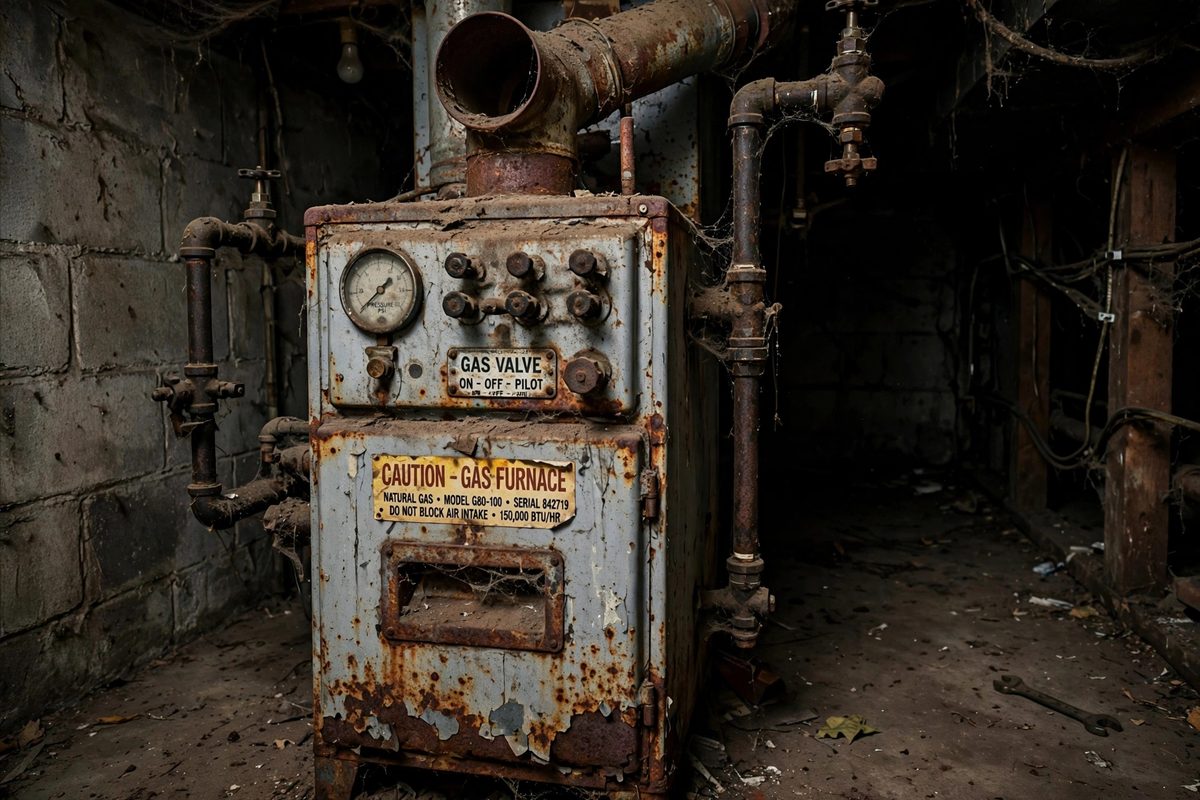
The seven signs, explained
1. It is getting old, and repairs are getting frequent
A gas furnace that has been maintained can run 15 to 20 years, but repair bills that arrive every season are the unit telling you its parts are wearing out together. One repair a year on a 17-year-old furnace is a pattern, not bad luck.
2. Heating bills keep climbing for no clear reason
When the same house, the same thermostat habits, and a similar winter produce noticeably higher heating use, the furnace is losing efficiency. Worn burners, a struggling blower, or a heat exchanger past its prime all burn more fuel for the same warmth.
3. Some rooms never get warm anymore
Uneven heat that is new, not something the house always had, often traces back to a weakening blower or ductwork that has shifted or come loose. When the furnace can no longer push air the way it used to, the far rooms suffer first.
4. It has started making new noises
Banging, rattling, squealing, or a low groan that was not there last winter all point to mechanical wear: loose panels, failing blower bearings, or expanding and contracting metal under stress. Noises that grow louder over weeks deserve attention before they become failures.
5. It cycles on and off constantly
Short cycling wears parts far faster than normal operation and usually signals overheating, a misreading thermostat, or a furnace that no longer matches the house. A system that cannot complete a normal heating cycle is a system under strain.
6. The burner flame looks yellow or flickers
A healthy gas burner flame burns steady and blue. A yellow, wavering flame can mean dirty burners or, more seriously, a combustion problem. Do not ignore this one: it is the sign most closely tied to carbon monoxide risk.
7. You see soot, rust, or moisture around the unit
Black soot near the burners, rust streaks on the cabinet, or water pooling at the base all indicate something wrong inside: poor combustion, a failing vent, or condensation where it should not be. Any of these warrants a professional inspection soon.
What to do when the signs stack up
Start with a full tune-up and inspection, and ask the technician for a straight assessment of the heat exchanger, the blower, and the control board. Those three parts decide whether a furnace has years left or months. A cracked heat exchanger, in particular, ends the repair conversation, because the safe fix is replacement. Our heat exchanger repair page explains how that inspection works.
If the unit is repairable, fix what is broken and keep up with yearly maintenance. If the technician finds multiple major parts failing on an older furnace, price the repair against a new system before authorizing the work.
An inspection now tells you whether you are looking at a repair or a replacement, while you still have time to choose.
Plan the replacement on your schedule, not the furnace's
There is a real advantage to replacing a furnace in October instead of January: you can compare options calmly, schedule the install at your convenience, and avoid emergency-decision pressure. If your furnace is showing three or more of these signs, get a furnace replacement assessment this fall rather than waiting for the coldest week of the year to decide for you.
Frequently asked questions
My furnace is 18 years old but still runs. Should I replace it?
Not automatically. Age plus symptoms is what matters. An 18-year-old furnace with steady bills, even heat, and no new noises may have seasons left. The same age with climbing bills and repeat repairs is telling you to plan a replacement.
Are rising energy bills really a furnace warning sign?
They can be, when nothing else changed. Compare similar winter months year over year. If usage climbs while your habits and the weather stay roughly the same, declining furnace efficiency is a likely cause worth investigating.
What does a yellow burner flame mean?
It means combustion is not as clean as it should be. Dirty burners are one cause, but a yellow or flickering flame can also signal a more serious combustion or venting problem. Have it checked promptly rather than watching it.
How many repairs are too many?
There is no magic number, but repairs every heating season on a furnace over 15 years old add up fast. When a single repair approaches half the value of a new system, or breakdowns keep interrupting your winter, replacement usually makes more sense.
Can a tune-up fix all seven of these signs?
A tune-up can resolve several, including dirty burners, a struggling blower, and minor efficiency loss. It cannot reverse a cracked heat exchanger or undo 18 years of wear. Think of the tune-up as both a fix for the small stuff and a diagnosis for the big stuff.
Sources and Further Reading
Last updated: October 19, 2026
Wondering how much life your furnace has left?
A professional inspection gives you a straight answer, plus a plan whether the answer is repair or replace.