Carbon Monoxide Safety & Detection in Herndon, VA
Carbon monoxide has no smell and no color. A cracked heat exchanger or a blocked flue can fill a home with it while everyone sleeps. We install detectors where they matter most and check your furnace for the faults that let CO escape.
Where Carbon Monoxide Comes From in a Home
CO comes from incomplete burning. Any fuel-burning appliance can make it, but furnaces are the ones that run all night.
- ✓Cracked heat exchangers
A crack lets combustion gases mix with the air your furnace blows through the house.
- ✓Blocked or rusted flues
A blocked flue traps exhaust in the house instead of venting it outside.
- ✓Dirty or misadjusted burners
Burners that do not burn cleanly make more carbon monoxide.
- ✓Backdrafting from negative pressure
Exhaust fans and dryers can pull flue gases back down the chimney in tight homes.
- ✓Other fuel-burning appliances
Water heaters, fireplaces, and generators can all produce CO. Detectors should cover the whole home.
Detectors in the Right Places, Furnaces Checked for Leaks
Two jobs, one visit: detectors your home can rely on, and a furnace cleared of CO risks.
Walkthrough and placement plan
We map your home. Bedrooms, hallways, and the furnace area all get coverage.
Detector installation
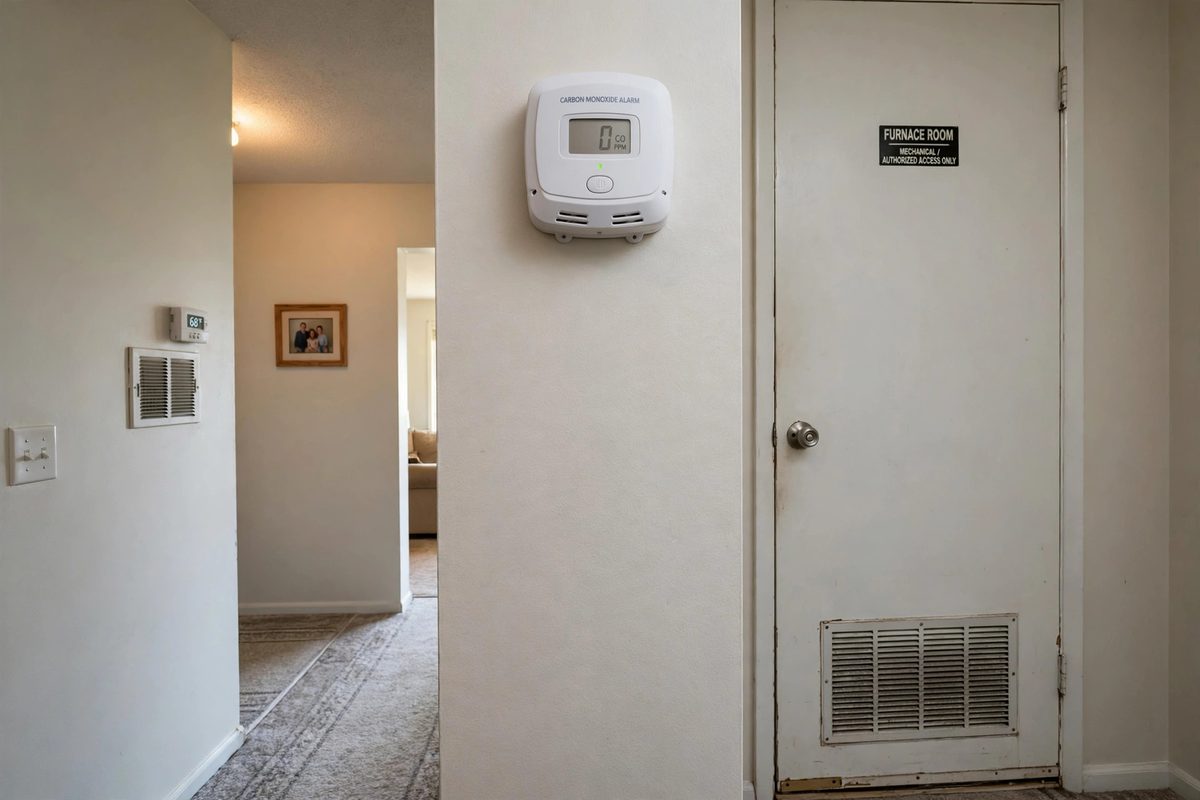
Hardwired or battery units, mounted where they will sense CO fastest in each room.
Furnace combustion check
We inspect the heat exchanger, burners, and flue for the faults that produce CO.
Show you the signs
We explain what to listen for and exactly what to do if an alarm ever sounds.
Carbon Monoxide Questions
The questions that matter most, answered plainly.
What are the symptoms of carbon monoxide exposure?
Headache, dizziness, nausea, and confusion. They are often mistaken for the flu, except everyone in the house feels it at once and pets may be affected too. If you suspect CO, get outside into fresh air immediately.
My CO alarm is sounding. What should I do?
Get everyone, including pets, out of the house first. Call emergency services from outside. Do not go back in to open windows or grab things. Once officials clear the home, call us to inspect the furnace.
Where should carbon monoxide detectors go?
Outside each sleeping area, on every level of the home, and near but not directly above fuel-burning appliances. We follow the detector manufacturer's placement guidance for your layout.
How is a real alarm different from a low-battery chirp?
A steady alarm means CO is detected. Get out. A short chirp every 30 to 60 seconds usually means low battery or an expired sensor. Check the manual, but treat any unfamiliar sound as an alarm until you are sure.
Can a furnace tune-up prevent carbon monoxide problems?
It catches the common causes: cracked heat exchangers, blocked flues, dirty burners. That is why the combustion check leads every tune-up we do.
How long do CO detectors last?
Most sensors wear out after several years. Check the date printed on the back of yours. We note detector ages during every visit and flag expired ones.
Last updated: October 19, 2026
Don't guess about an invisible danger.
Detectors in the right places and a furnace checked for CO faults. Call now and we will handle both.