A well-maintained gas furnace typically runs 15 to 20 years. Electric furnaces land in a similar range. Those numbers assume the unglamorous stuff actually happened: yearly service, regular filter changes, and prompt repairs when small problems appeared. A furnace that got none of that can give up years earlier, while a pampered one can outlast the averages.
Lifespan is not just trivia. It is the number that decides whether a breakdown means a repair or a replacement, so knowing your furnace's age is one of the most useful things a homeowner can do.
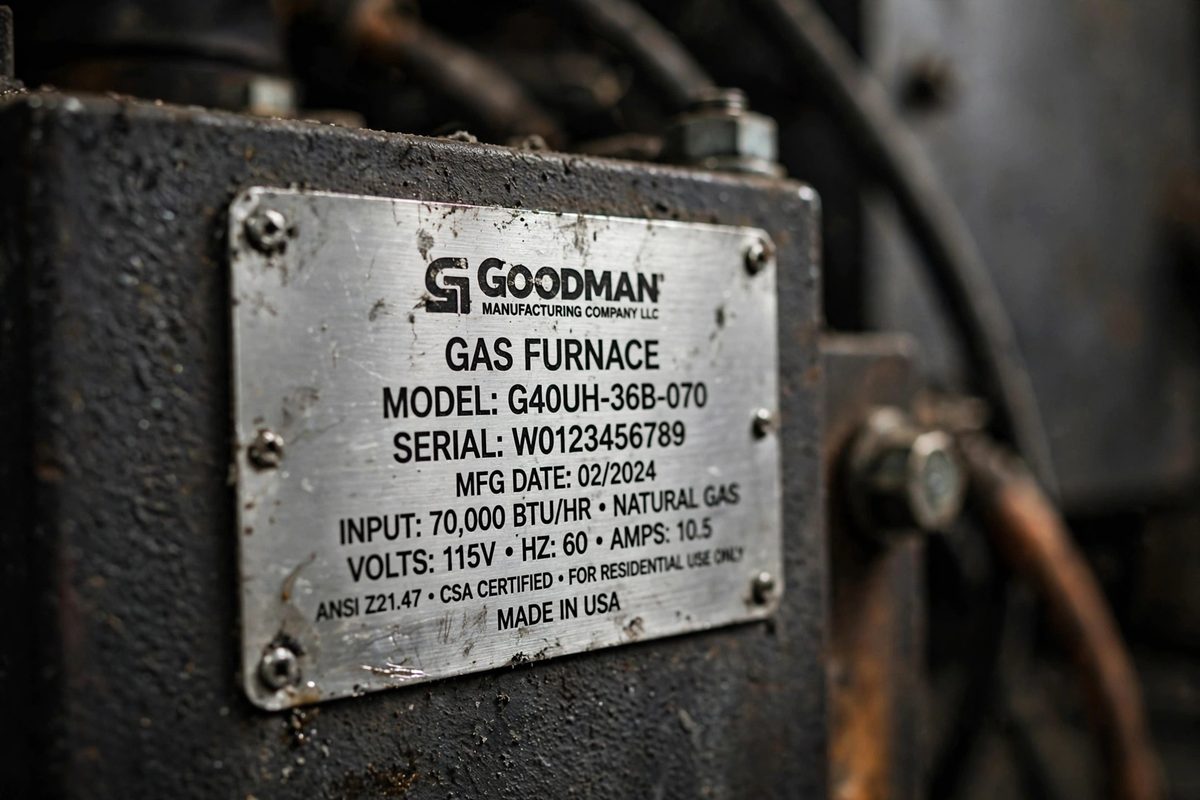
Find your furnace's birthday
Open the furnace cabinet, usually the upper door, and look for the nameplate or rating plate: a sticker or metal tag with the model and serial numbers. The serial number encodes the manufacture date, though every brand encodes it differently. Some use the first four digits as year and week, others bury it deeper. A quick search of the brand plus serial number format decodes it, or a technician can read it in seconds during a visit.
What shortens a furnace's life
Neglected maintenance is the biggest life-shortener. Dirty burners, clogged filters, and never-inspected heat exchangers force the system to work harder and hotter than designed. Oversizing is next: a furnace too big for the house short-cycles for its entire life, multiplying wear on every part. Poor initial installation, running the system with blocked vents, and ignoring small repairs until they cascade into big ones all take years off the total.
What stretches it out
Annual tune-ups do more for longevity than anything else, because they catch the small stuff: a weakening igniter, a drifting gas pressure, a heat exchanger starting to show stress. Filter changes every one to three months keep airflow healthy and the limit switch happy. Keeping the area around the furnace clean and the vents unblocked costs nothing and helps constantly. Homeowners who do these three things routinely get the top end of the lifespan range. Our annual furnace maintenance covers the professional half of that routine.
We can read the nameplate, assess its condition, and give you an honest read on how much life is left.
Reading the signs of old age
A furnace near the end of its life drops hints: repairs every season, heating bills creeping up, rooms that never quite warm up, new rattles or groans, and a burner flame that does not look the way it used to. One symptom is a repair. Several together on a unit past year fifteen is the furnace telling you to start planning. That is when a furnace replacement conversation beats another round of repairs.
Frequently asked questions
How do I find out how old my furnace is?
Check the nameplate inside the cabinet for the model and serial numbers. The serial number encodes the manufacture date in a brand-specific format. If the plate is missing or unreadable, a technician can usually date the unit from its components.
Does maintenance really add years to a furnace?
Yes, more than any other factor. Annual service catches worn parts before they damage neighboring components, and clean filters and burners keep operating temperatures where the engineers intended. The lifespan gap between maintained and neglected furnaces is measured in years, not months.
Do electric furnaces last longer than gas furnaces?
Roughly the same, around 15 to 20 years with maintenance. Electric units skip combustion wear but still cycle heating elements and contactors that wear out. Either type dies early without basic upkeep.
My furnace is 22 and still runs fine. Should I replace it anyway?
If it heats evenly, runs quietly, and has needed no major repairs, you can keep running it with yearly inspections. Just start planning: at 22, any major failure is a replacement decision, and having the plan ready beats making it during a January breakdown.
What kills furnaces early more than anything else?
Restricted airflow from neglected filters. It overheats the heat exchanger every cycle, trips the limit switch repeatedly, and stresses the exact part whose failure ends the furnace's life. A few dollars of filters protects thousands of dollars of equipment.
Sources and Further Reading
Last updated: October 19, 2026
Want an honest read on your furnace's remaining years?
An inspection tells you the unit's age, its condition, and whether to repair, maintain, or plan ahead.