Inside every gas furnace, the heat exchanger is a set of metal chambers or tubes that keeps combustion gases on one side and your household air on the other. Burners heat the metal, the blower pushes air across it, and the exhaust vents outside. It is a simple, elegant barrier, and it has to stay intact, because the moment exhaust gases mix with supply air, carbon monoxide can enter the home.
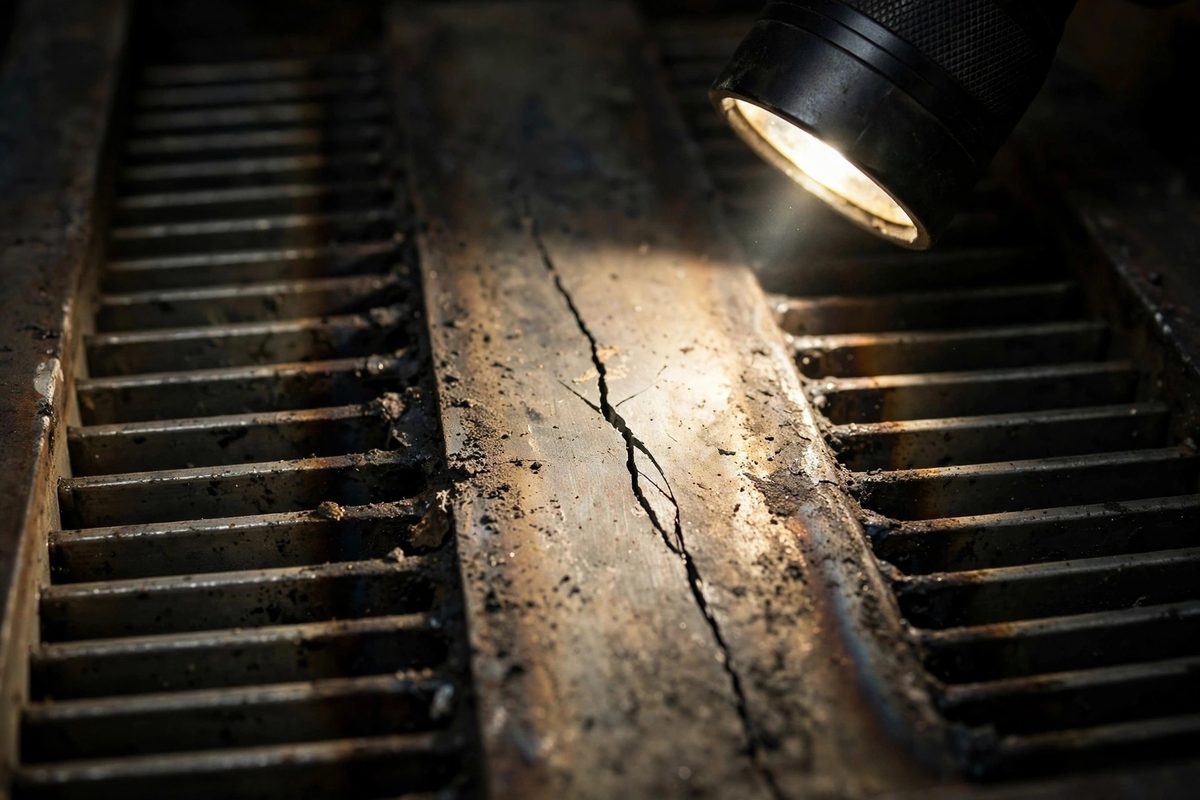
Metal expands and contracts with every heating cycle, thousands of times a season. After many years, that thermal stress can crack the metal, usually where you cannot see it without disassembly and a camera or specialized test.
Warning signs homeowners can notice
No homeowner can see a crack directly, but several symptoms point toward one. Soot buildup around the burners or on the furnace cabinet suggests poor combustion. A burner flame that flickers or changes color when the blower kicks on can mean air is pushing through a breach and disturbing the flame. A carbon monoxide detector alarming, especially more than once, is the sign to act on immediately. And any visible rust, corrosion, or water staining on or around the heat exchanger area means the metal is deteriorating.
Why this is not a patch-it repair
A cracked heat exchanger cannot be welded, sealed, or patched safely. The metal has fatigued, the operating temperatures are extreme, and any repair would fail under the same thermal stress that caused the crack. The industry-standard fix is replacing the heat exchanger itself or, on an older furnace, replacing the whole unit. Our heat exchanger repair page walks through how that decision gets made during an inspection.
How a technician actually confirms a crack
Confirmation takes more than a glance. A technician shuts the system down safely, removes panels and sometimes the blower assembly, and inspects the exchanger with a bright light and mirror or a borescope camera. They may also run a combustion analysis or a tracer test. What they are ruling out matters as much as what they find, because several other problems mimic cracked-exchanger symptoms. A careful inspection protects you from replacing a furnace over a misdiagnosis.
Do not wait on these symptoms. A heat exchanger inspection gives you a definitive answer.
What happens after confirmation
If the exchanger is cracked, the furnace should not run until it is fixed. Your technician should show you the evidence, explain whether the heat exchanger alone or the full furnace makes more sense given the unit's age, and lay out the options without pressure. Because combustion safety is involved, also make sure your carbon monoxide detection is in place and working before the heating season continues.
Frequently asked questions
Can I see a crack in my heat exchanger myself?
Almost certainly not. Cracks form inside chambers and tubes that are buried within the furnace, often hairline-thin. Finding them takes disassembly, strong light, and usually a camera. Visual checks from outside the cabinet cannot rule a crack in or out.
Is a cracked heat exchanger an emergency?
Treat it as urgent. A breached exchanger can allow carbon monoxide into the supply air. If a detector alarms or you suspect a crack, shut the furnace down and call for service right away rather than running it another night.
Can a cracked heat exchanger be patched or welded?
No, not safely. The metal fatigues from repeated heating and cooling, and a patch faces the same stress that cracked the original. Replacement of the exchanger, or of the furnace if it is older, is the accepted fix.
How does a crack cause carbon monoxide problems?
The exchanger is the barrier between combustion exhaust and your household air. A crack lets exhaust, which contains carbon monoxide, get pulled into the airstream the blower circulates through the house.
How often should the heat exchanger be inspected?
Every year, as part of a fall tune-up. Annual inspection catches rust, stress, and early cracking long before they become dangerous, and it is the single best reason not to skip yearly service on a gas furnace.
Sources and Further Reading
Last updated: October 19, 2026
Suspect heat exchanger trouble? Get a definitive answer.
Our technicians inspect with cameras and combustion testing, then show you exactly what they found.