Think of it like a car. A single-stage furnace has one speed: full throttle or off. A two-stage furnace has a low gear for mild weather and a high gear for deep cold. Both get you to the same temperature, but the ride feels different, and the low gear gets used far more than you would guess.
Northern Virginia's climate makes this choice interesting, because our winters spend most of their time in the mild-to-moderate range where a low stage shines.
Single-stage: full blast or off
A single-stage furnace fires at 100% capacity every time it runs. On a 40-degree day, that is far more heat than the house needs, so the furnace satisfies the thermostat quickly and shuts off, then repeats. The result is wider temperature swings: a blast of hot air, then a cooling wait. It is simple, proven technology with fewer parts to fail, and it heats just fine. The comfort is just less refined.
Two-stage: a low gear for mild days
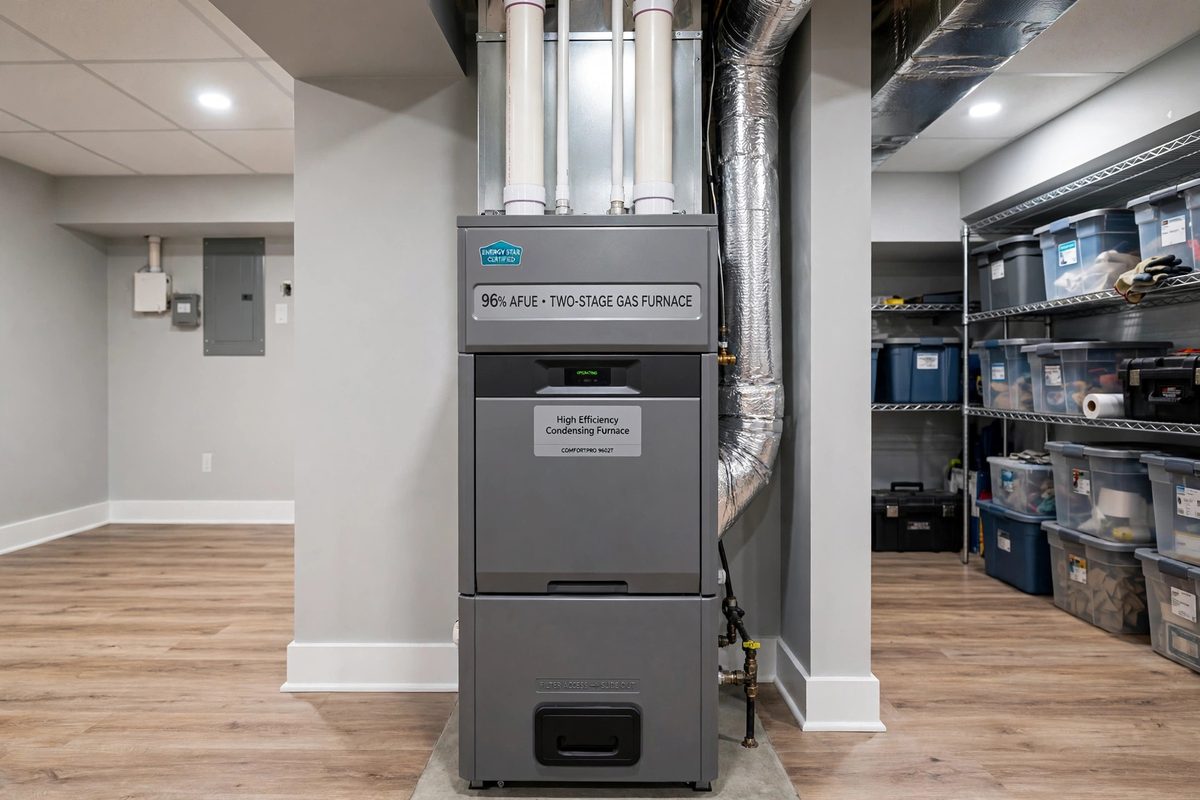
A two-stage furnace typically runs its low stage at around 60 to 70% of full capacity. On mild and moderate days, which is most of a Northern Virginia winter, it stays in low: longer, gentler heating cycles that hold the temperature steady instead of swinging. When a real cold snap hits, the high stage kicks in for full power. You get full capacity when you need it and finesse the rest of the time.
The comfort difference you will feel
Longer low-stage cycles do three things homeowners notice. First, temperatures stay steadier, without the hot-then-cool cycling of single-stage. Second, the air from the registers feels less blasty, because the blower runs gentler too. Third, longer cycles filter and circulate the home's air more thoroughly, which helps with both even temperatures and air quality. It is the difference between a furnace you notice and one you forget about.
Energy use and wear
Two-stage units use less fuel on mild days simply because they burn less gas per minute in low stage, and the longer cycles avoid the wasteful startup surge repeating as often. Electrical use drops too, since the blower runs slower most of the time. On wear, gentler operation is kinder to parts over the years. The savings are real but modest: buy two-stage for comfort first, with efficiency as a welcome bonus rather than the whole justification.
Tell us about your house and how you heat it now. We will recommend the staging that fits, not just the premium option.
The thermostat question
To get the full benefit, a two-stage furnace wants a thermostat that understands staging. Some two-stage furnaces can stage themselves on a timer with a basic thermostat, but a proper two-stage thermostat decides based on actual conditions, which is smarter. When we handle a new furnace installation, we match the controls to the equipment so the staging works as designed. A thermostat upgrade on its own cannot give a single-stage furnace a low gear, but it can still smooth out its operation.
Frequently asked questions
Will a two-stage furnace lower my heating bills?
Somewhat. It burns less fuel per minute during the long mild-weather stretches when low stage runs, and gentler blower operation uses less electricity. Expect modest savings; the bigger payoff is comfort.
Do I need a special thermostat for a two-stage furnace?
For the best results, yes: a thermostat designed for staging decides when to shift gears based on conditions. Some furnaces can approximate staging on a timer with a standard thermostat, but it is a rougher approach.
Is two-stage worth it in Northern Virginia?
Our winters are a good match. We get long stretches of mild-to-moderate cold where low stage does the work, punctuated by cold snaps that need high stage. That pattern is exactly what two-stage design serves best.
Can my ductwork handle a two-stage furnace?
Usually yes, and often better than it handled single-stage, because gentler airflow is easier on ducts. Undersized or badly leaking ducts are a problem for any furnace, though, and worth addressing with the replacement.
What is the difference between two-stage and variable-speed?
Two-stage has two fixed output levels. Variable-speed adjusts output continuously across a range, like a dimmer instead of a two-position switch. Variable-speed is the next step up in comfort and usually in price, building on the same idea.
Sources and Further Reading
Last updated: October 19, 2026
Want steadier heat without the blasts?
Ask us whether two-stage makes sense for your home. We will give you a straight answer.