A furnace is a machine with fire, fans, and sheet metal, so some sound is inevitable. Ducts tick as they warm, the blower hums, burners whoosh softly. The trick is knowing where normal ends and trouble begins, because furnaces rarely fail silently. They usually complain first.
Listen for when the noise happens: at startup, during the run, or at shutdown. That timing narrows the cause enormously.
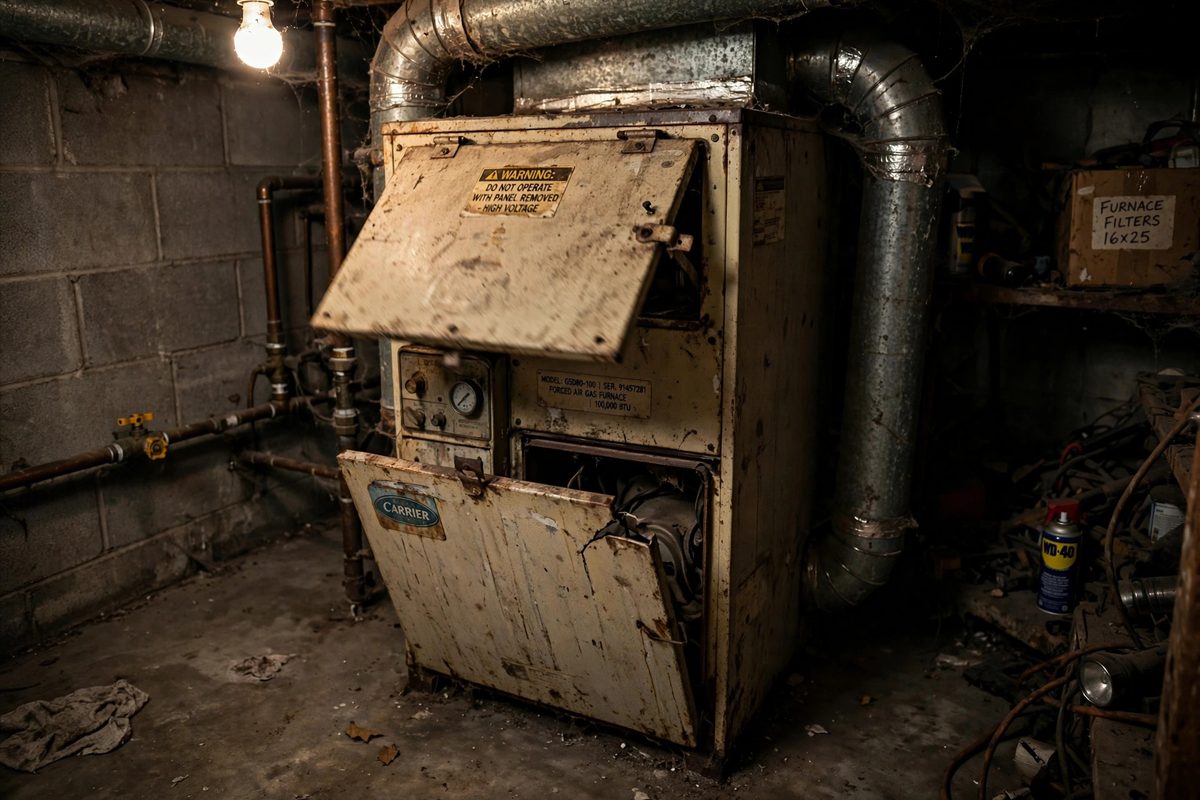
Booms and bangs at startup
A loud boom when the burners ignite is the one startup noise to take seriously. It usually means delayed ignition: gas built up before the flame caught, and the small explosion that follows stresses the heat exchanger. Occasional soft popping from expanding ductwork is normal and harmless. A true boom, especially one that shakes the unit, needs a technician soon, because repeated delayed ignition damages the exact part you least want damaged.
Rattling and vibrating
Rattling is usually the simplest noise: a loose access panel, a few backed-out screws, or ductwork vibrating against a joist. If the rattle stops when you press gently on the furnace cabinet, a panel is the culprit and tightening it is fair game for a homeowner. Rattling from deep inside the blower compartment, or a rattle that has grown steadily louder, points to a failing blower motor mount or wheel and deserves a look.
Squeals, screeches, and high-pitched whines
Squealing almost always comes from the blower assembly: worn motor bearings or, on older units, a slipping belt. It often starts only on the coldest mornings and then becomes constant as the wear progresses. Bearings do not heal, so a squeal that is getting worse is a countdown to a blower failure. This is a repair to schedule, not an emergency, but do not ignore it for a whole season.
Describe when it happens: startup, during the run, or shutdown. That detail tells a technician where to look.
Hums, buzzes, and scraping
A low electrical hum usually comes from the transformer and is normal. A loud or new buzz can mean a failing capacitor or a loose electrical component. Scraping or grinding metal-on-metal from the blower area is more urgent: it suggests the blower wheel is hitting its housing, and running it that way destroys both parts. Shut the system down and call if you hear grinding.
Ductwork ticks and pops
Light ticking or popping as ducts heat up and cool down is the sound of sheet metal expanding, and it is harmless. If it is loud enough to bother you, the fix is usually on the ductwork side: securing loose runs or insulating where ducts pass through framing. Annoying, but not a furnace problem.
Frequently asked questions
My furnace booms when it starts. Is that dangerous?
A true boom signals delayed ignition, which stresses the heat exchanger with every occurrence. It is not an emergency tonight, but schedule service soon. Repeated booms over a season can crack the exchanger, turning a tune-up into a replacement.
Are duct pops and ticks normal?
Yes. Sheet metal expands when heated and contracts as it cools, and thin ducts tick audibly. It is harmless. Only worry if the popping is new, very loud, or accompanied by banging from the furnace cabinet itself.
Why does the blower squeal only on cold mornings?
Cold thickens the lubricant in aging motor bearings, so the wear shows up first on the coldest starts. As the bearings degrade further, the squeal spreads to every cycle. It is an early warning, not a false alarm.
Can I tighten a rattling panel myself?
Yes, if pressing on the cabinet stops the rattle. Power the furnace off at its switch first, snug the panel screws, and confirm the panel sits flat. If the rattle persists or comes from inside the blower compartment, leave it to a technician.
Which noise means shut it down right now?
Metal-on-metal grinding or scraping from the blower, and any boom violent enough to shake the unit. Turn the furnace off at its switch and call. Most other noises can wait for a scheduled visit, but do not wait a whole season on a worsening squeal.
Sources and Further Reading
Last updated: October 19, 2026
Not sure whether that noise is normal?
Tell us what you hear and when. We will tell you honestly whether it can wait or needs a visit.